BlindBits
Project Description
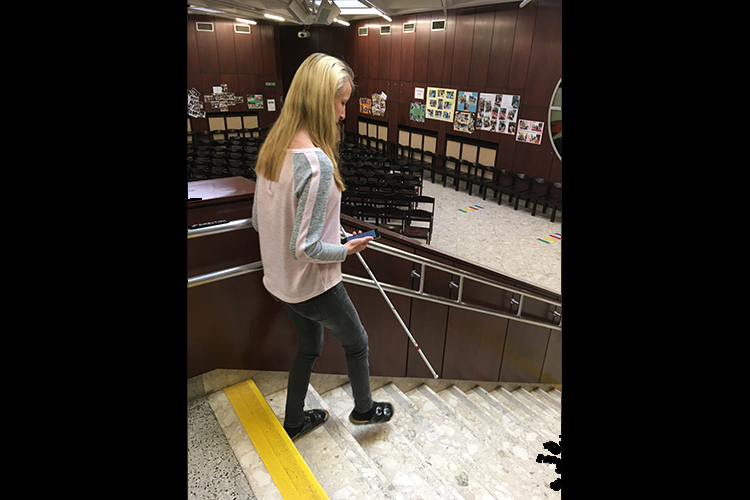
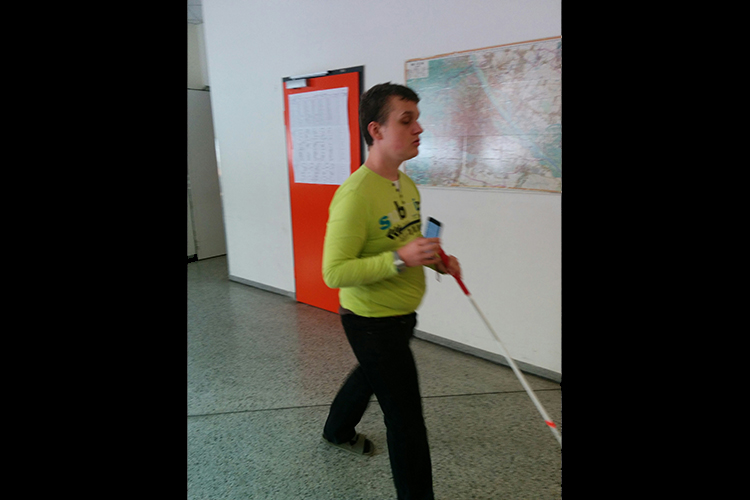
Blind and visually-impaired students receive orientation and mobility training to learn general navigation skills and specific routes and become more independent in their daily lives. To foster this training a project called BlindBits aims to improve the wayfinding of students in a school for the blind in Vienna, called the “Bundes-Blindenerziehungsinstitut” (BBI). To achieve this, a scavenger hunt-like game app for the smartphone is developed with the addition of an editor, that lets the students create their own stories and tasks for the app. Since this can be a tiresome endeavor, an assistant is introduced that completes a lot of the work in order to reduce the time necessary to create a game.
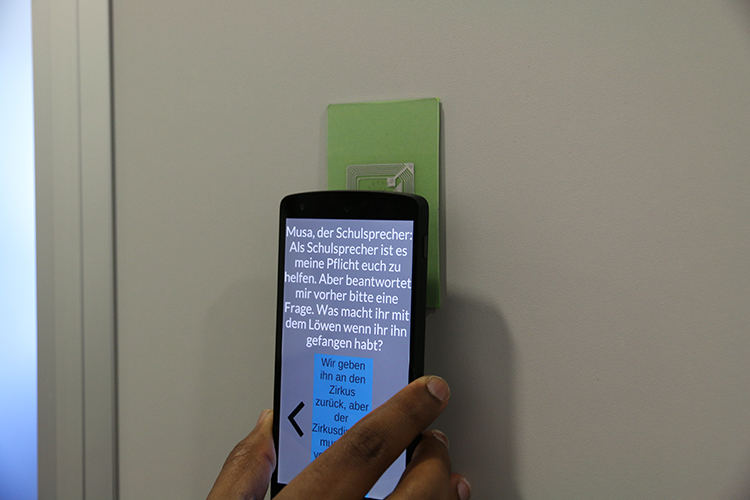
Game principle: Essentially, the goal is to navigate from one place (in this game it is the door of a room) to another and by doing so, fulfill all the tasks that challenge the player on his or her way. At the beginning, the player has to run the app and choose a game they want to play. Those games are a collection of predefined, as well as user-generated levels. The app will then ask the player to position himself at a specified start point. From there on, the player will be faced with multiple tasks, which include navigating to different locations within the school building. Depending on the level, different paths in the storyline can be taken, where the player has to solve puzzles and gather items in order to achieve the goal of the game.
The project was coordinated by the AIT (Austrian Institute of Technology) and was carried out in cooperation with the BBI and the University of Applied Sciences Upper Austria. I was solely responsible for the implementation and technical issues of the editor, the game and the assistant.
Level Editor
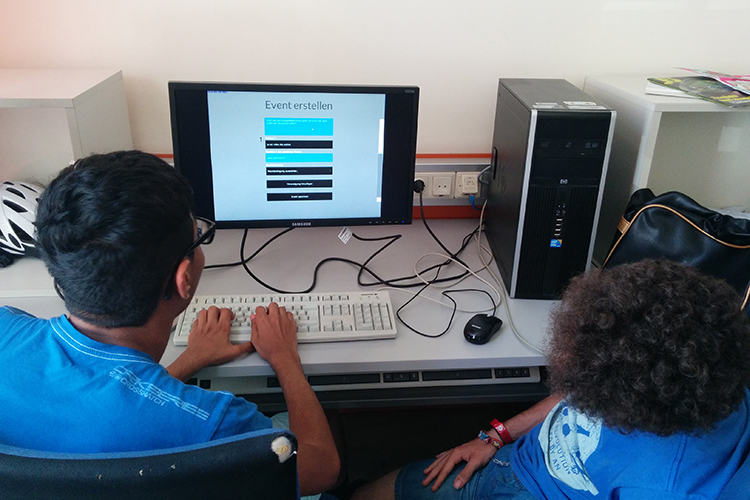
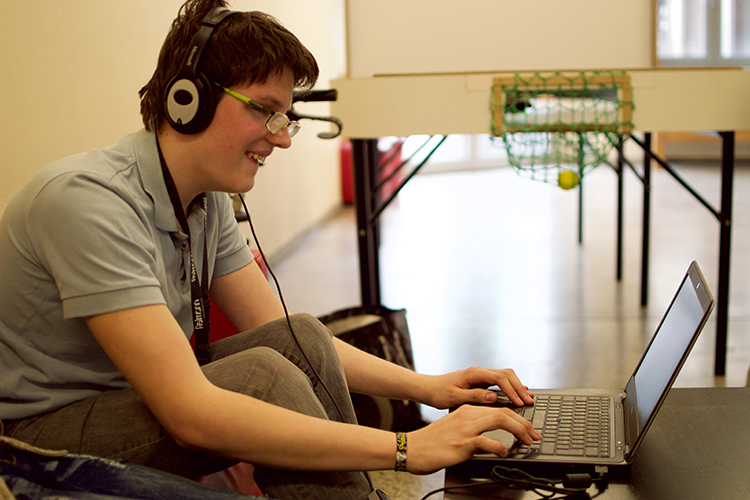
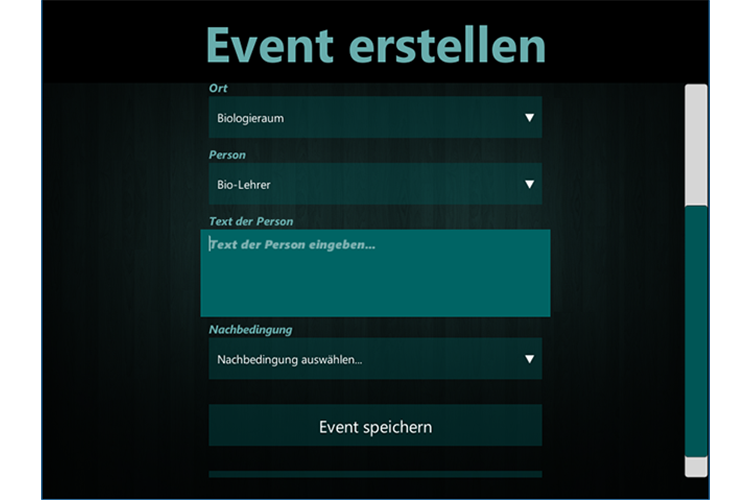
With the editor tool, the students can write their own stories with its structures and tasks for the scavenger hunt game. The editor is text-based and can be operated with the keyboard only using the default Windows Text-To-Speech (TTS) API for reading out the UI elements and its contents This allows a blind student to create his own level.
In order to create stories faster, most of the work can be done automatically by the assistant, like setting up the structure and providing most of the game specific-information, while leaving the creative part, which is to come up with a story, to the user. Results from a test run have shown that the creation with the assistant in comparison to manual step-by-step creation greatly facilitates and accelerates the work.
3D Building
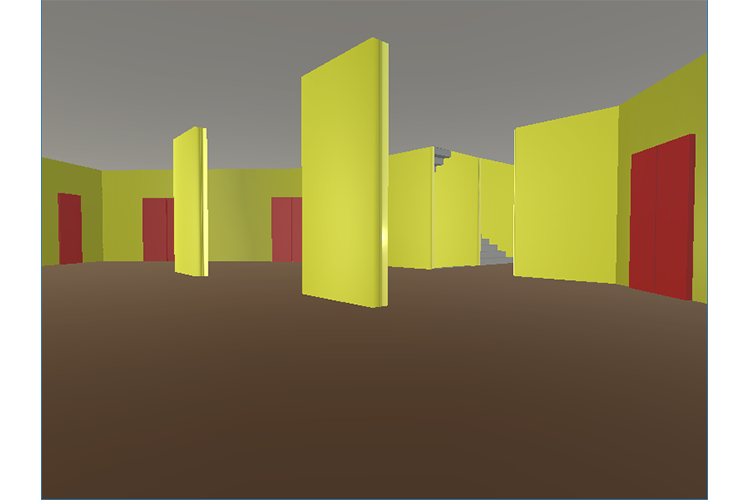
The students can play the game with the smartphone in the real school building. However, there is also the possibility to play it in a virtual 3D world. This allows them to test the games and get to know the school building better in a safe environment.
Project Details
- BlindBits is funded by the 5th Sparkling Science call
- Duration of whole project:
November 2014 - October 2016 (Implementation started October 2015) - Team:
Austrian Institute of Technology in cooperation with the Bundes-Blindenerziehungsinstitut and the University of Applied Sciences Upper Austria - Lead:
Elke Mattheiss (AIT, Innovation Systems Department)
Link to Master thesis (16,6 MB)